Learn
& explore
For students writing an assignment, teachers preparing a lesson, and researchers looking for a starting point. Background explainers, a reference table of events, fifteen questions answered in full, research topics worth pursuing, and where to read further.
- Explainers
- Freedom movement
- Reference
- People & events
- FAQ
- 15 questions
- Research
- 8 topics
- Reading
- Sources listed
Five phases, and where Rajguru sits
The Indian freedom struggle was not one movement with one method. Placing Rajguru accurately means knowing which part of it he belonged to — and which parts he did not.
The Indian National Congress is founded. For its first two decades it works largely by resolution, petition and appeal to British liberal opinion, seeking reform within the imperial framework.
The partition of Bengal produces mass boycott, the Swadeshi movement, and the first sustained revolutionary organisations — Anushilan Samiti and Jugantar. The two strands, mass and clandestine, run in parallel from here on.
Gandhi transforms the Congress into a mass organisation. Non-Cooperation, and later Civil Disobedience from 1930, mobilise millions on an explicitly non-violent basis.
The H.R.A. and, from 1928, the H.S.R.A. attempt to organise armed resistance with a constitution and a socialist programme. This is Rajguru's world. It is small, and it is not the whole story.
Quit India, the Indian National Army, the naval mutiny of 1946 and the exhaustion of British capacity after the Second World War bring independence in August 1947 — sixteen years after Rajguru's death.
How the two strands related to each other
The mass movement and the revolutionary movement were not two armies of the same campaign. They disagreed, publicly and sharply, about whether political violence could ever serve the cause. Gandhi held that it could not and said so after the executions; the H.S.R.A. answered him in print in The Philosophy of the Bomb.
But they also overlapped. Many revolutionaries had begun in Congress volunteer corps — Rajguru himself joined the Seva Dal as a schoolboy. Congress leaders defended revolutionaries in court and campaigned against their executions while rejecting their methods. And the enormous public sympathy that followed the 1931 hangings came largely from people who were themselves committed to non-violence.
A student who can hold both of those facts at once understands the period better than one who has been given a single hero.
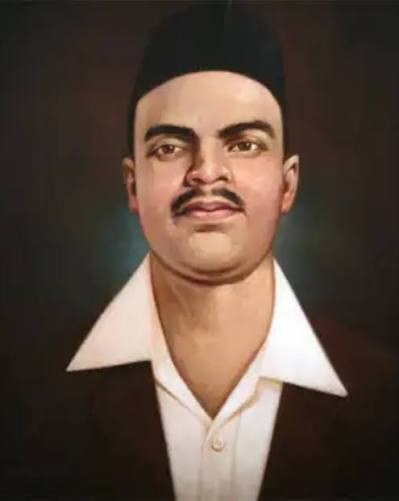
Rajguru belonged to a small clandestine organisation within a very much larger national movement.
Who's who in this history
Dates worth memorising
| Date | Event | Why it matters |
|---|---|---|
| 24 Aug 1908 | Rajguru born at Khed | Pune district, Bombay Presidency; the town is now Rajgurunagar. |
| Sep 1928 | H.S.R.A. constituted at Delhi | The H.R.A. of 1924 is remade with a socialist programme. |
| 30 Oct 1928 | Lathi charge at Lahore | Lala Lajpat Rai injured during the Simon Commission protest. |
| 17 Nov 1928 | Lala Lajpat Rai dies | The immediate provocation for the Saunders action. |
| 17 Dec 1928 | Shooting of J. P. Saunders | Rajguru fires first; a case of mistaken identity. |
| 8 Apr 1929 | Assembly bombs, Delhi | Bhagat Singh and Dutt court arrest. Rajguru not involved. |
| 10 Jul 1929 | Lahore Conspiracy Case opens | Twenty-eight accused, at Borstal Jail, Lahore. |
| 13 Sep 1929 | Jatindra Nath Das dies | Sixty-third day of the hunger strike; national reaction. |
| 30 Sep 1929 | Rajguru arrested at Pune | Pistol and fourteen cartridges recovered. |
| 1 May 1930 | Ordinance III of 1930 | Lord Irwin creates the Special Tribunal by decree. |
| 7 Oct 1930 | Judgment of the tribunal | Death sentences for Bhagat Singh, Sukhdev and Rajguru. |
| 11 Feb 1931 | Privy Council appeal dismissed | The last legal avenue closes. |
| 5 Mar 1931 | Gandhi–Irwin Pact | Clemency raised; commutation not granted. |
| 23 Mar 1931 | Execution at Lahore Central Jail | Carried out in the evening, a day early. Observed as Shaheed Diwas. |
| 2013 | Commemorative stamp issued | India Post, ₹5, “Shiv Ram Hari Rajguru”. |
Questions, answered in full
Shivaram Hari Rajguru (24 August 1908 – 23 March 1931) was an Indian revolutionary and a member of the Hindustan Socialist Republican Association. He is best known for his part in the shooting of the British police officer J. P. Saunders at Lahore on 17 December 1928, for which he was tried in the Lahore Conspiracy Case and hanged at Lahore Central Jail on 23 March 1931 alongside Bhagat Singh and Sukhdev Thapar. He was twenty-two.
He was born on 24 August 1908 at Khed, a town on the Bhima river in the Pune district of the Bombay Presidency, into a Marathi Deshastha Brahmin family. His parents were Hari Narayan Rajguru and Parvati Devi, and he had an elder brother, Dinkar. His father died when he was about six. Khed was later renamed Rajgurunagar in his honour.
Because they were tried together in the Lahore Conspiracy Case, sentenced to death on the same day — 7 October 1930 — and hanged together on the evening of 23 March 1931 at Lahore Central Jail. The grouping is historically exact, and 23 March is observed across India as Shaheed Diwas, Martyrs' Day, for all three.
A party from the Hindustan Socialist Republican Association waited outside the District Police Headquarters at Lahore intending to kill Superintendent James A. Scott, who had ordered the lathi charge in which Lala Lajpat Rai was injured. Jai Gopal gave the signal when a young officer left on a motorcycle. Rajguru fired the first shot and Bhagat Singh fired further shots. The officer was Assistant Superintendent John P. Saunders, not Scott — a mistaken identification. Head constable Chanan Singh, who gave chase, was shot dead by Chandra Shekhar Azad.
No. The bombs thrown in the Central Legislative Assembly on 8 April 1929 were the act of Bhagat Singh and Batukeshwar Dutt, who deliberately allowed themselves to be arrested in order to obtain a courtroom platform. Rajguru had no part in it. The two episodes are frequently merged in popular accounts, but they are separate events, months apart, with different participants.
He was arrested at Pune on 30 September 1929, after nine and a half months at liberty following the shooting at Lahore. A pistol and fourteen cartridges were recovered. He was taken to Lahore and joined to the proceedings already under way.
Formally Crown v. Sukhdev and others, it was the prosecution arising from the killing of J. P. Saunders and from the activities of the Hindustan Socialist Republican Association. Committal proceedings opened on 10 July 1929 inside Borstal Jail, Lahore, with twenty-eight accused. The charges included murder, conspiracy to murder, and waging war against the King — which allowed the Crown to place the entire organisation on trial rather than three individuals.
Because the court that convicted the accused was created for the case by executive decree. On 1 May 1930 the Viceroy, Lord Irwin, promulgated Ordinance III of 1930 establishing a three-judge Special Tribunal that could proceed in the absence of the accused, with no appeal except to the Privy Council.
When the accused were beaten in court on 12 May 1930, Justice Agha Haidar protested, refused to sign the record, and was removed from the bench. The ordinance lapsed after roughly six months; the judgment it produced stood.
He was hanged at Lahore Central Jail on the evening of 23 March 1931, at about seven o'clock — roughly twelve hours earlier than the scheduled morning of 24 March, and at dusk rather than dawn, because the authorities feared public disorder. Rajguru was twenty-two. Bhagat Singh and Sukhdev Thapar were both twenty-three.
The bodies were not returned to the families. They were removed at night through a breach cut in the rear wall of the jail, taken towards Ferozepur, and cremated in haste near the village of Ganda Singh Wala on the banks of the Sutlej; the remains were consigned to the river.
Accounts of the detail vary, but it is not disputed that the families were denied the bodies and that the cremation was secret and nocturnal. The site is commemorated today as the National Martyrs Memorial at Hussainiwala.
The H.S.R.A. was a revolutionary organisation formed in September 1928 at a meeting in the ruins of Feroz Shah Kotla in Delhi, reconstituting the Hindustan Republican Association of 1924. It had a central committee for political direction and a military wing under Chandra Shekhar Azad.
The addition of the word “socialist” committed it to a social and economic programme, not only to ending British rule. Rajguru belonged to its military wing under the party alias “Raghunath”.
This is disputed. Some accounts, including entries in widely used reference works, place him among the participants at Kakori in August 1925. He would have been sixteen, most detailed chronologies put his entry into organised revolutionary work later, and he was not among those charged in the Kakori proceedings. The evidence is thin and this archive records the claim as unresolved rather than adopting it.
No writings, letters, statements or memoirs by Rajguru are in general circulation. Unlike Bhagat Singh, who left essays, letters and a jail notebook, he left no known text of his own. Quotations circulating under his name should be treated as unverified unless a contemporary source can be named. This is the central difficulty in writing his biography — and the reason this archive contains no quotations attributed to him.
The town of Khed in Pune district, Maharashtra, was renamed Rajgurunagar in his honour after independence. Both names remain in local use and the surrounding taluka is still called Khed. The family's ancestral house there — Rajguru Wada, a plot of roughly 2,788 square metres on the bank of the Bhima — is maintained as a memorial, where the national flag has been hoisted each Republic Day since 2004.
Shaheed Diwas, or Martyrs' Day, is observed across India on 23 March, the anniversary of the execution of Bhagat Singh, Sukhdev Thapar and Shivaram Rajguru at Lahore in 1931. Wreaths are laid at the National Martyrs Memorial at Hussainiwala and at memorial sites elsewhere. India also observes 30 January as Martyrs' Day for the assassination of Mahatma Gandhi; the two are distinct observances.
Eight questions worth working on
These are genuine gaps, not exercise questions. Each of them could support a school project, a university essay, or a serious piece of local research.
Rajguru's Varanasi years
What can be established about the years between his departure from Pune and his emergence in the H.S.R.A.? Which institutions, akhadas and study circles existed in Varanasi in the mid-nineteen-twenties, and what records of them survive?
Why the archive is silent
A study of how historical memory depends on documents: compare the volume of writing about Bhagat Singh, who wrote, with that about Rajguru, who did not. What does this tell us about whose lives get reconstructed?
Ordinance III of 1930
An examination of government by ordinance in colonial India, using the Special Tribunal as the case study. What were the limits on the Viceroy's ordinance power, how were they argued before the Privy Council, and why did the argument fail?
What “socialist” meant in 1928
Trace the H.S.R.A.'s political programme from the H.R.A. constitution of 1924 through the writings of 1929–31. What did the organisation actually propose, and how did it relate to the international socialist movement of the period?
The trial in the newspapers
How was the Lahore Conspiracy Case reported in the Indian and British press between 1929 and 1931? A comparison of coverage in nationalist, Anglo-Indian and London papers would be revealing about each.
The Gandhi debate
Reconstruct the argument between Gandhi and the revolutionaries on political violence, using their own published statements rather than later summaries. State each side at its strongest before assessing it.
Commemoration since 1947
Track how the three martyrs have been commemorated — statues, renamings, stamps, films, textbook treatments — and how the emphasis has shifted between decades and between states.
Chanan Singh, and the others left out
The Indian head constable killed at Lahore is almost never named in popular accounts. Who else disappears from the standard retelling of this case, and what does the pattern of omission reveal?
Where to read further
Reference
- Shivaram Rajguru — Wikipedia, the general reference point used as a starting source for this archive. Useful for outline facts; follow its citations rather than relying on the article alone.
- Wikipedia's related articles on Bhagat Singh, Sukhdev Thapar, Chandra Shekhar Azad and the Hindustan Socialist Republican Association, for the surrounding context.
On the trial
- A. G. Noorani, The Trial of Bhagat Singh: Politics of Justice — the standard legal account of the proceedings, the ordinance and the appeal.
- Kuldip Nayar, Without Fear: The Life and Trial of Bhagat Singh — a narrative treatment drawing on court records and interviews.
On the revolutionaries
- Chaman Lal (ed.), The Bhagat Singh Reader — the collected writings, essential for understanding what the H.S.R.A. argued.
- Shiv Verma (ed.), Selected Writings of Shaheed Bhagat Singh — edited by a surviving member of the organisation.
- Manmathnath Gupta, History of the Indian Revolutionary Movement — a participant's history of the wider movement.
General histories of the period
- Bipan Chandra and others, India's Struggle for Independence — the standard single-volume narrative.
- Sumit Sarkar, Modern India, 1885–1947 — for the social and economic context in which the movement operated.
Archives and institutions
- The National Archives of India, New Delhi — Home Department (Political) files on the Lahore Conspiracy Case.
- The Prime Ministers' Museum and Library (formerly the Nehru Memorial Museum and Library), New Delhi — private papers and periodicals of the period.
- State archives in Punjab and Maharashtra, and the district record offices at Pune, for local material.
Verified fact, and interpretation
Throughout this site, three things are kept separate. Verified fact — dates, names, places and events attested in the standard record — is stated plainly. Disputed matter, such as Rajguru's supposed presence at Kakori, is flagged as disputed. Interpretation — judgments about significance, motive or consequence — is written so that you can tell it is a judgment and disagree with it.